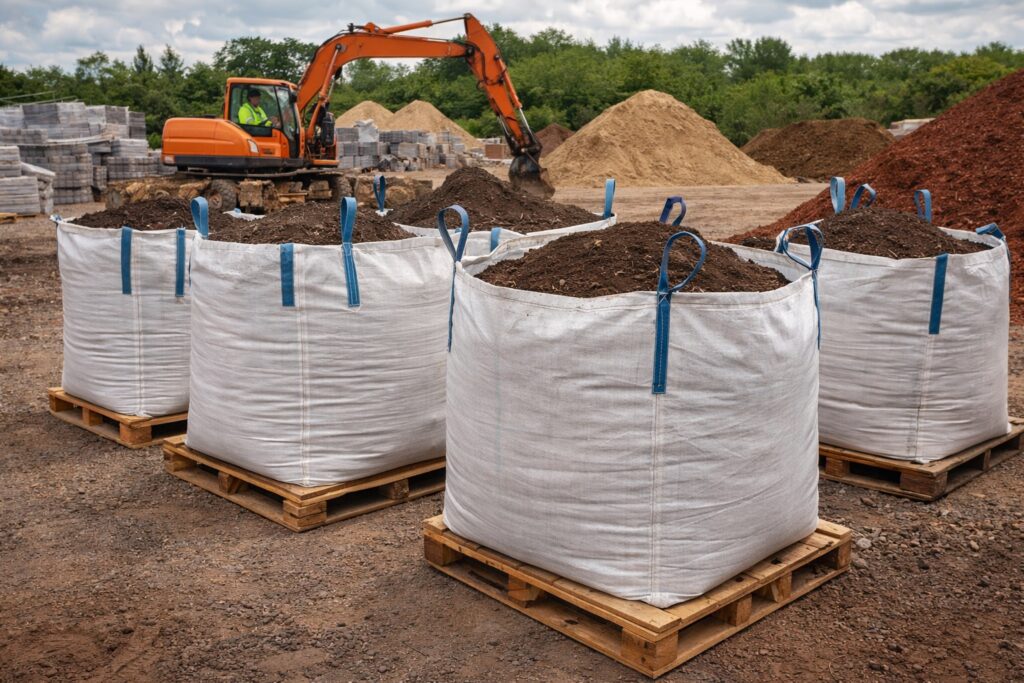

Large outdoor projects move quickly. Crews often handle tons of soil across multiple work zones within tight timelines. Loose soil piles can slow progress, create material loss, and make job sites harder to organize. When soil handling becomes inefficient, labor costs increase, and project timelines slow.
Material control matters on construction and landscaping sites. Soil must move efficiently from delivery to installation without contamination, waste, or unnecessary handling. Bulk bags for soil provide a practical solution. These durable packaging options help crews transport, store, and manage soil more efficiently while keeping job sites cleaner.
For large-scale projects, bulk soil bags support better material handling and help teams maintain a steady workflow across busy job sites.
1. Faster Material Handling With Soil Packaging Bags
Large projects often involve constant movement of soil between staging areas and work zones. Loose soil requires shoveling, reloading, and repeated handling.
Bulk bags simplify this process. Soil arrives pre-packed in manageable units that can be moved with forklifts, pallet jacks, or equipment already present on site.
This approach offers several operational advantages:
- Faster unloading from delivery trucks
- Less manual handling by crews
- Easier distribution across large job sites
- Improved workflow between teams
By reducing unnecessary handling, crews spend more time completing installation tasks rather than managing materials.
2. Better Inventory Control and Material Tracking
Soil quantities can become difficult to track when delivered in loose piles. Material may be used unevenly across the site, making it harder to monitor usage or estimate remaining supply.
Bulk bags for soil allow contractors and project managers to track soil in clearly defined units. Each bag represents a measured volume, helping teams plan usage more accurately.
This improves:
- Material forecasting during large projects
- On-site inventory management
- Cost tracking for soil usage
- Coordination between crews working in different areas
Packing soil in consistent quantities makes project planning more predictable.
3. Reduced Soil Waste and Site Contamination
Loose soil piles are vulnerable to environmental exposure. Rain, wind, and equipment traffic can contaminate or scatter material across the job site.
Bulk bags help reduce these risks. Soil remains contained until crews need it, protecting the material from unnecessary exposure.
This containment supports:
- Cleaner job sites
- Reduced soil loss from wind or runoff
- Lower risk of mixing soil types
- Better protection from debris or contamination
Maintaining soil quality helps ensure the material performs as expected when applied in planting beds, turf installation, or grading work.
4. Improved Transportation and Storage Efficiency
Transportation logistics become more complex as project size increases. Deliveries must be staged, moved, and stored without disrupting site operations.
Bulk bags make transportation more efficient because they stack neatly on pallets and can be staged in organized rows.
This provides several practical benefits:
- Efficient truck loading and unloading
- Space-saving storage on crowded job sites
- Simplified movement using standard lifting equipment
- Easier distribution across multiple work areas
Organized material staging also helps reduce safety hazards associated with loose soil piles.
5. Professional Presentation for Commercial Projects
Commercial landscaping and large construction developments often require well-organized work sites. Developers, property managers, and inspectors regularly visit these locations during active construction.
Heavy-duty bags for soil support a more professional presentation by keeping materials contained and organized.
Instead of scattered soil piles, job sites maintain:
- Clear work zones
- Controlled material staging areas
- Improved cleanliness across the site
This level of organization reflects careful project management and supports smoother coordination among contractors.
When Bulk Soil Bags Make the Most Sense
Bulk soil bags work particularly well in projects that involve large material volumes and multiple crews.
Common scenarios include:
- Commercial landscaping installations
- Large residential developments
- Municipal park projects
- Sports field construction
- Nursery and soil supplier distribution
In these situations, controlled packaging helps teams manage soil efficiently while maintaining clean and organized work environments.
Efficient Soil Handling Starts With the Right Packaging
Large landscaping and construction projects require efficient material management. Bulk bags for soil help crews move materials faster, reduce waste, improve site organization, and maintain accurate inventory tracking.
With durable packaging designed for soil handling, contractors and suppliers can support smoother operations across demanding job sites.
Contact PolyPak Packaging for plastic bags for soil distribution and packaging designed for reliable handling.