
Modern manufacturing environments demand accuracy, speed, and cost control at every stage of production. From industrial equipment to electrical enclosures and structural components, performance expectations continue to rise across sectors. In this environment, metal fabrication plays a critical role in helping manufacturers overcome technical and operational barriers that can slow production or compromise quality.
Companies operating in energy, automation, infrastructure, and OEM supply chains face recurring fabrication challenges. Tight tolerances, material constraints, vendor inconsistencies, and budget pressures require coordinated solutions rather than isolated processes. Skilled fabrication teams equipped with advanced machinery and integrated production capabilities provide practical answers to these persistent obstacles.
1. Tight Tolerances and Precision Requirements
Precision is fundamental in industrial manufacturing. Components must align correctly during assembly, particularly in applications such as control panels, machine housings, and structural supports. Even small dimensional deviations can lead to fitment issues, mechanical stress, or system inefficiencies.
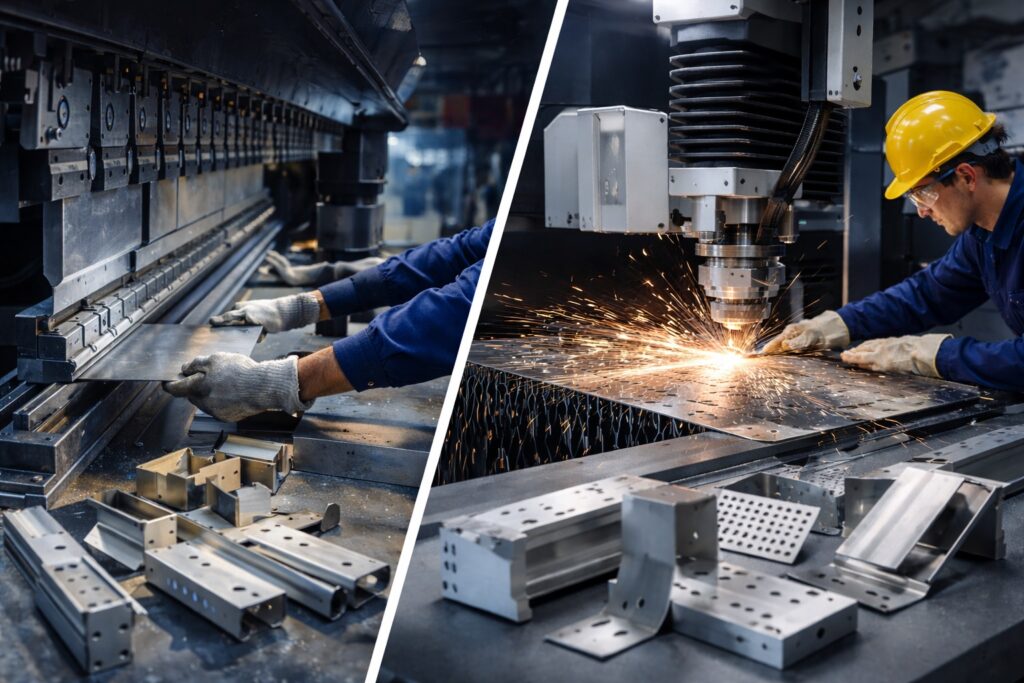
Professional fabrication teams address this challenge through CNC laser cutting, turret punching, and precision forming. These technologies ensure repeatable accuracy across production runs. Steel fabrication services support projects requiring consistent hole placement, clean edges, and accurate bend angles. The result is reliable component integration and reduced rework.
By applying digital design data directly to fabrication equipment, manufacturers achieve dependable results that meet engineering specifications.
2. Short Lead Times and Production Delays
Compressed project timelines place pressure on supply chains. Delays in fabricated components often disrupt downstream assembly and installation schedules and contractual commitments.
Integrated metal fabrication facilities streamline production by handling cutting, forming, welding, and finishing under one roof. This coordinated workflow minimizes transportation delays between vendors and improves scheduling control.
Metal fabrication in facilities that combine advanced machinery with organized production planning can efficiently process medium- to high-volume orders. Faster turnaround times support just-in-time manufacturing strategies and reduce the risk of costly bottlenecks.
3. Complex Custom Designs
Industrial projects rarely rely on simple geometries. Custom brackets, mounting frames, enclosures, and structural assemblies frequently involve intricate cutouts, multi-angle bends, and specialized mounting provisions.
Fabrication specialists address complexity through design-for-manufacturing principles. Early collaboration between engineers and fabricators reduces design conflicts and identifies efficient production methods. CNC-driven processes enable accurate reproduction of complex CAD models, ensuring that custom components match technical intent.
By combining precision cutting with controlled forming and welding, fabrication teams transform complex digital designs into durable physical components without sacrificing structural integrity.
4. Material Selection and Durability Issues
Material choice significantly impacts long-term performance. Factors such as load-bearing capacity, corrosion resistance, environmental exposure, and regulatory requirements must be evaluated carefully.
Steel fabrication services in Toronto often involve carbon steel, stainless steel, and aluminum. Each material presents distinct fabrication considerations. Stainless steel may be required for corrosive environments, while aluminum supports lightweight applications.
Experienced fabrication providers guide material selection based on application demands. Proper handling, cutting parameters, and finishing techniques maintain structural properties and surface quality. This attention to detail helps prevent premature wear, corrosion, or structural failure in demanding industrial environments.
5. Inconsistent Quality from Multiple Vendors
Working with separate vendors for cutting, forming, welding, and finishing can introduce inconsistencies. Variations in tolerances, surface finish, or dimensional alignment create challenges during assembly.
Centralized fabrication services reduce these risks by maintaining a unified set of quality control standards. When a single provider manages the full production cycle, inspection protocols remain consistent across stages.
Metal fabrication in facilities that offer integrated capabilities provides traceability and accountability. This unified approach strengthens reliability and simplifies project management for OEMs and industrial clients.
6. Cost Overruns and Production Waste
Material waste, inefficient layouts, and repeated rework contribute to escalating production costs. Poor sheet-metal nesting, excessive scrap, and manual errors can significantly affect project margins.
Advanced fabrication equipment uses optimized nesting software to maximize sheet utilization and minimize scrap. Automated processes reduce labor variability and improve repeatability, which decreases rejection rates.
Efficient production planning combined with disciplined quality checks ensures predictable cost structures. Manufacturers benefit from controlled budgets and consistent output without compromising on performance standards.
Strengthening Manufacturing Performance Through Integrated Fabrication
Manufacturing challenges related to precision, speed, complexity, material durability, vendor coordination, and cost control require comprehensive solutions. Integrated fabrication facilities provide the infrastructure and technical capability to address these issues systematically.
By combining advanced equipment with coordinated workflows, Weldflow Metal Products supports industrial clients with reliable and scalable fabrication solutions. Organizations seeking dependable results can partner with Weldflow Metal Products to streamline operations and address complex production demands through sheet metal fabrication services in Toronto.