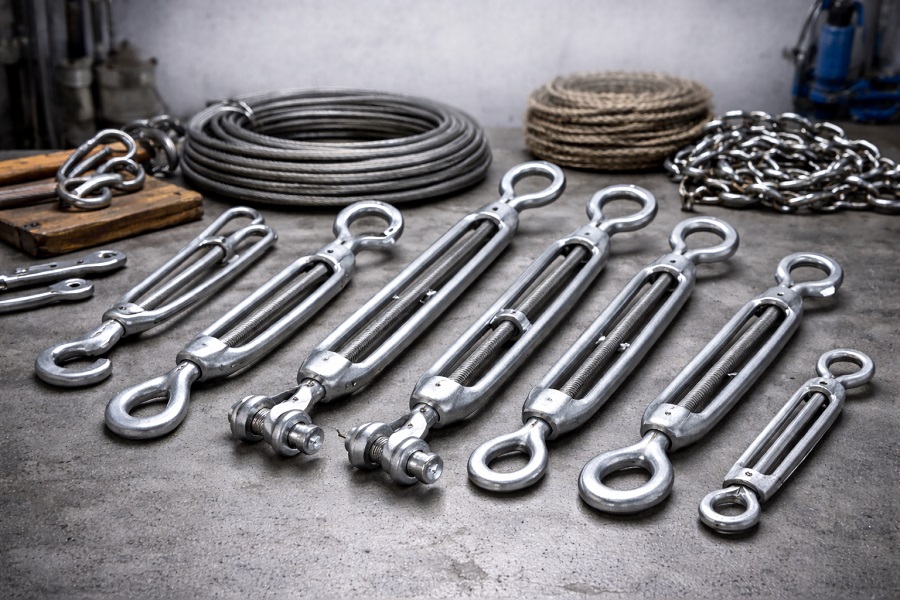

Turnbuckles play a vital role in heavy rigging systems by allowing controlled tensioning, alignment, and load stabilization. While many buyers focus on physical size when selecting a turnbuckle, experienced riggers know that strength rating is just as important—if not more so. Choosing the wrong combination of size and strength can lead to premature wear, load instability, or catastrophic failure.
This comparative guide breaks down how turnbuckle size and turnbuckle strength differ, how they relate to one another, and which factor should take priority in different rigging scenarios.
Understanding Turnbuckle Size
Turnbuckle size typically refers to the diameter of the body and threaded ends, along with the overall length. Larger turnbuckles generally feature thicker cross-sections and heavier construction.
What Larger Sizes Offer
- Greater physical mass and durability
- Increased thread engagement
- Better resistance to bending
- Higher potential working load limits
Limitations of Relying on Size Alone
- Large size does not always guarantee higher strength
- Material quality and manufacturing standards still determine capacity
- Oversized turnbuckles may not fit existing hardware
Size provides a visual indication of robustness, but it should never replace verified load ratings.
Understanding Turnbuckle Strength
Turnbuckle strength is defined by the working load limit (WLL) and ultimate breaking strength provided by the manufacturer.
What Determines Strength
- Material type (carbon steel, alloy steel, stainless steel)
- Heat treatment process
- Thread form and depth
- End fitting style (eye, hook, jaw)
Two turnbuckles of the same size may have very different strength ratings depending on how they are made.
Small High-Strength vs Large Low-Strength Turnbuckles
Small High-Strength Turnbuckles
Manufactured from alloy steel and heat-treated, these provide high load capacity in a compact form.
Advantages
- High strength-to-size ratio
- Lighter weight
- Suitable for confined spaces
Best For
- Precision rigging
- Structural tensioning
- Equipment bracing
Large Low-Strength Turnbuckles
Often made from mild steel with larger physical dimensions but lower strength ratings.
Advantages
- Lower cost
- Easier visual handling
- Suitable for light-duty tensioning
Best For
- Fence tensioning
- Temporary setups
- Non-critical loads
Key Difference: Strength rating, not physical size, defines safe lifting capability.
Comparing Material Types
Carbon Steel Turnbuckles
- Moderate strength
- Cost-effective
- Common in light industrial use
Alloy Steel Turnbuckles
- High strength
- Heat-treated for durability
- Preferred for heavy rigging
Stainless Steel Turnbuckles
- Corrosion resistant
- Lower strength than alloy steel
- Best for marine or corrosive environments
Material selection heavily influences performance regardless of size.
Thread Diameter vs Load Capacity
Larger thread diameters usually increase tensile strength, but thread quality matters just as much:
- Rolled threads outperform cut threads
- Deeper thread engagement increases holding power
- Coarse threads handle contamination better
This is why manufacturer WLL must always be verified.
Matching Turnbuckle to Load Direction
Turnbuckles perform best under straight-line tension.
- Inline loading maximizes strength
- Side loading reduces effective capacity
- Bending forces drastically lower safety margins
In heavy rigging, correct alignment often matters more than size selection.
Safety Factors and Compliance
Quality turnbuckles include:
- Stamped WLL
- Manufacturer identification
- Compliance with ASME or equivalent standards
Using uncertified hardware increases liability and risk.
When Size Matters More
Choose larger size when:
- Shock loading is possible
- Long-term fatigue resistance is required
- Threads will experience frequent adjustments
When Strength Matters More
Choose higher-rated strength when:
- Loads approach capacity limits
- Personnel lifting is involved
- Critical structural tensioning is required
Final Comparison Verdict
| Scenario | Priority |
| Heavy lifting | Strength |
| Precision tensioning | Strength |
| Space-restricted installs | Strength |
| High-abuse environments | Size + Strength |
| Light-duty tensioning | Size |
Conclusion
In heavy rigging applications, strength always outranks size as the primary selection factor. While larger turnbuckles often provide higher capacity, only verified working load limits confirm safe usage. The best approach is to choose a turnbuckle that meets or exceeds the required load rating, then verify size compatibility with surrounding hardware.
Balancing both size and strength ensures safer lifts, longer service life, and greater system reliability.