
In modern industrial and commercial construction, safety standards are continually evolving to address growing fire risks and regulatory requirements. Today, the industry is witnessing a clear shift toward adopting higher-performance fire-resistance systems.
Among them, 4-hour fire-rated assemblies have become the new benchmark for critical infrastructure, providing extended protection that can make the difference between containment and catastrophic loss.
What Qualifies as a 4-Hour Fire-Rated System
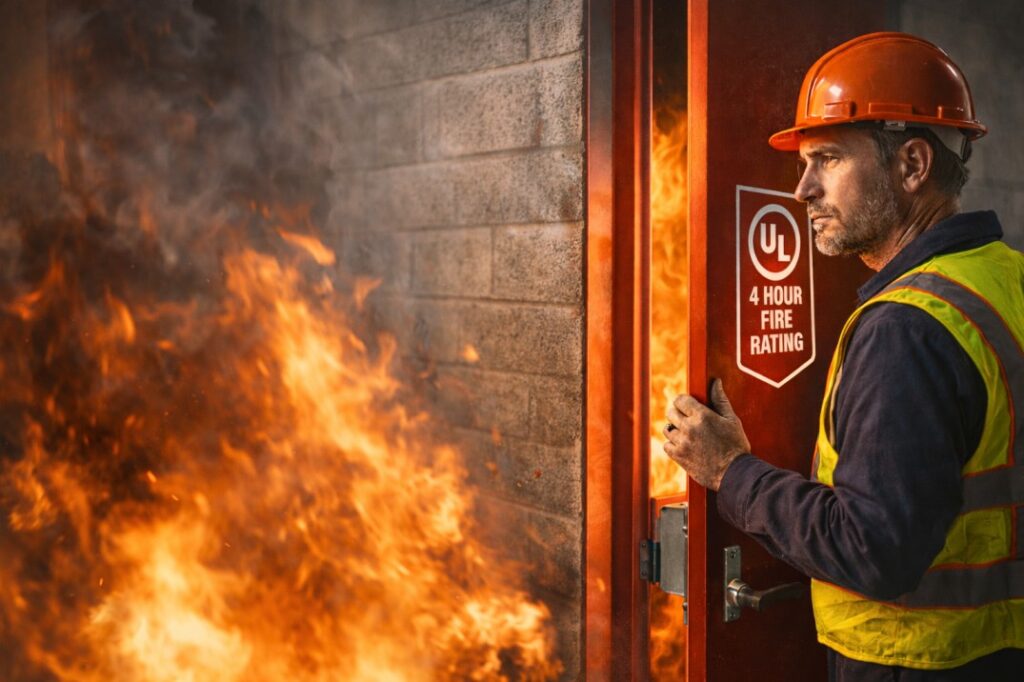
A 4-hour fire-rated system is designed and tested to resist fire exposure for a minimum of four hours before structural failure or breach occurs. This rating ensures that walls, ceilings, and other assemblies can withstand extreme temperatures and maintain their load-bearing capacity during a prolonged event.
The rating is determined through rigorous testing following standards such as ASTM E119 or UL 263, where materials are exposed to controlled furnace conditions that simulate real fire scenarios. Passing this test confirms that the system provides consistent insulation, stability, and integrity under high-heat exposure.
Applications for 4-Hour Fire-Rated Ceilings and Fire-Rated Walls
Industries dealing with flammable materials, sensitive equipment, or dense occupancy require advanced protection measures. A 4-hour fire-rated ceiling and a 4-hour fire-rated wall are commonly used in:
- Power generation and utility facilities: Protecting control rooms, cable tunnels, and turbine halls.
- Refineries and petrochemical plants: Isolating process units and storage areas.
- Data centers and telecommunication hubs: Preventing heat transfer between critical operational zones.
- Pharmaceutical and chemical facilities: Ensuring compliance with stringent safety codes.
These installations not only prevent fire spread but also maintain temperature control long enough to facilitate evacuation, emergency response, and damage mitigation.
Testing, Certification, and Code Requirements
A 4-hour fire-rated assembly must undergo independent laboratory testing to verify its performance against standardized criteria. Certification bodies issue test reports that detail endurance times, failure points, and construction details.
In most jurisdictions, building and safety codes mandate that these systems be installed according to tested and approved designs. Inspections and documentation are essential for compliance, ensuring that installed walls and ceilings provide the same level of protection as tested prototypes.
Key testing elements include:
- Integrity: The ability of a wall or ceiling to prevent the passage of flames and gases.
- Insulation: Limiting temperature rise on the unexposed surface.
- Load stability: Maintaining strength and support during the fire duration.
Proper certification guarantees that each 4-hour fire-rated wall or ceiling performs as intended during an actual emergency.
Comparing 2-Hour vs 4-Hour Systems: Performance Insights
While 2-hour systems remain widely used, the added endurance of 4-hour assemblies significantly enhances structural protection and safety. The difference is not just in time—it’s in the level of security provided.
A 2-hour system may be sufficient for standard occupancy structures, but mission-critical facilities require longer containment to protect valuable assets and ensure business continuity. In high-risk environments, 4-hour fire-rated assemblies provide greater confidence, giving emergency teams valuable extra time to act before temperatures reach failure thresholds.
Additionally, these systems are often constructed using advanced materials, such as reinforced gypsum, concrete composites, or fire-rated boards, that maintain their integrity under sustained thermal stress.
Conclusion – Investing in Endurance for Critical Infrastructure
As industries evolve, so must their fire protection strategies. The adoption of 4-hour fire-rated assemblies demonstrates a commitment to resilience and life safety. Whether it’s a 4-hour fire-rated ceiling safeguarding overhead systems or a 4-hour fire-rated wall separating hazardous zones, these systems deliver unmatched endurance. Investing in long-duration protection isn’t just about compliance—it’s about ensuring the future of operations, infrastructure, and lives with proven, 4-hour fire-rated solutions.