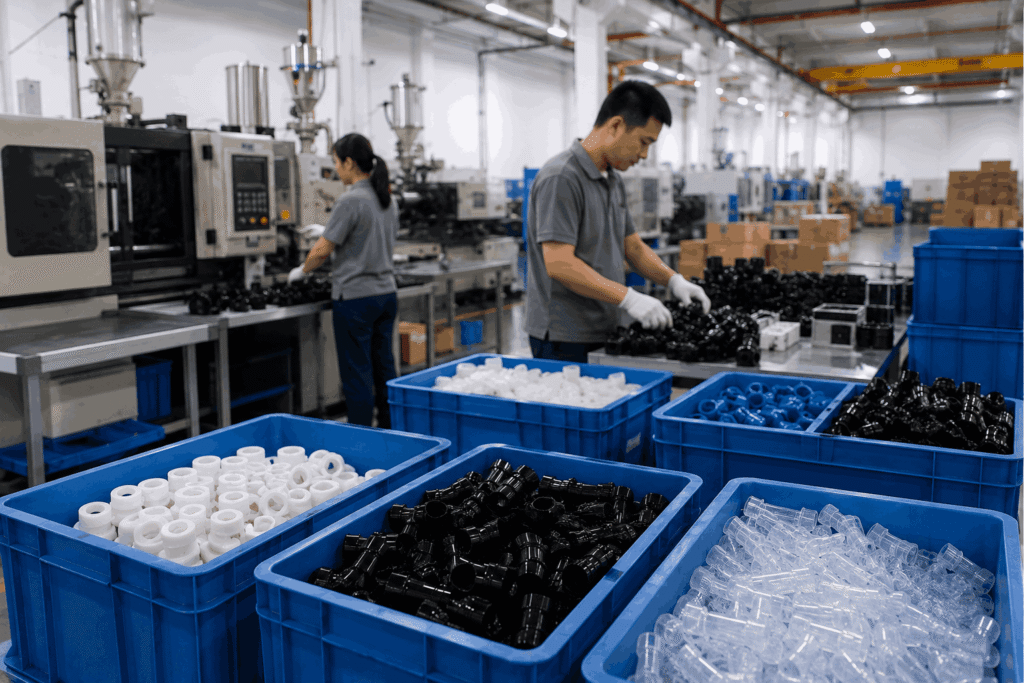

For buyers comparing plastic manufacturing companies in Ontario, supplier selection should go beyond material availability and quoted price. Industrial projects often require technical material guidance, consistent inventory, documentation support, close-tolerance cutting, machining, and custom fabrication. The right partner helps procurement teams reduce specification risk, improve production continuity, and support long-term component reliability.
Plastic materials are used across manufacturing, construction, signage, equipment maintenance, automation, and custom fabrication. Each application may require specific performance characteristics, including wear resistance, machinability, chemical resistance, thermal stability, moisture resistance, and dimensional consistency. For this reason, industrial buyers should evaluate suppliers based on technical capability as well as supply chain reliability.
People Also Ask
What should buyers look for in plastic manufacturing companies in Ontario?
Buyers should review material inventory, technical support, fabrication capability, documentation, cutting accuracy, and supply reliability before selecting a plastics partner.
Why is material selection important in industrial plastic fabrication?
Material selection affects strength, wear resistance, chemical compatibility, dimensional stability, machinability, and long-term part performance in industrial applications.
Understanding Industrial Plastic Supply Partners
The Evolution of Industrial Plastic Supply
Industrial plastic sourcing has shifted from basic product purchasing to application-driven material selection. Buyers now need materials that align with load requirements, fabrication methods, compliance expectations, and operating conditions.
This shift is especially important for engineered plastics used in wear parts, machine guards, liners, guides, signage components, and fabricated assemblies. Material performance can affect part life, production uptime, maintenance frequency, and replacement planning.
Defining Full-Service Fabrication and Distribution
Full-service support means more than stocking sheet, rod, tube, and film. It includes helping buyers select the right plastic grade, confirm material properties, review documentation, and prepare materials for fabrication or installation.
A supplier with cutting, machining, forming, and fabrication capabilities can reduce vendor handoffs. This helps improve accountability across material sourcing, part production, and quality control.
The Role of Experienced Providers
Experienced providers support procurement teams through material knowledge, established supply channels, and process familiarity. This matters when projects require repeatable material quality, urgent replacement parts, or consistent technical judgment.
Johnston Industrial Plastics Limited is best positioned as an industrial plastics supplier, distributor, fabricator, and machining solutions partner. This positioning reflects the need for both material access and technical support in industrial procurement.
Why Industrial Plastic Suppliers Drive Supply Chain Resilience
Mitigating Global Disruption Risks
Global supply disruptions can create risk when buyers depend on distant sources for critical plastic materials or machined parts. Long lead times, inconsistent communication, and limited inventory visibility can affect production planning.
Regional sourcing can help reduce these risks by keeping material access closer to the point of use. This is valuable when downtime, engineering changes, or maintenance requirements create urgent demand.
Supporting Critical Industrial Applications
Industrial buyers often need materials that perform reliably in demanding environments. Applications may include production line components, equipment guards, wear strips, chemical-resistant liners, and fabricated replacement parts.
A reliable supplier helps confirm whether the selected plastic can meet the required operating conditions. This includes reviewing mechanical performance, chemical exposure, temperature range, cleanability, and compliance needs.
Enhancing Production Agility
Production agility depends on both material availability and technical support. When engineering teams need to test or modify a component, a capable supplier can help review material options, machining limits, and fabrication requirements before production begins.
This reduces the risk of selecting a material that is available but not suitable. It also supports faster iteration for prototypes, replacement parts, and custom industrial components.
Core Capabilities of a Reliable Plastic Supply Partner
High-Performance and Mechanical Plastics
Material capability separates a technical plastics partner from a basic catalogue supplier. Industrial buyers may need HDPE, UHMW, Nylon, Acetal, PVC, acrylic, polycarbonate, PTFE, or other engineering plastics depending on the application.
A strong plastic manufacturer in Canada or technical supplier should help match material properties to load, friction, temperature, chemical exposure, and machining requirements. This ensures the material is selected for performance, not only availability.
Precision CNC Machining and Custom Fabrication
Precision fabrication depends on material behaviour, machine setup, tooling, tolerances, and inspection planning. Plastic components can require CNC machining, routing, drilling, bending, welding, polishing, or assembly depending on the final use.
Machined plastic parts may include guards, guides, spacers, wear components, display parts, equipment covers, and custom assemblies. A supplier with fabrication capability can help maintain consistency from raw material selection through finished-part delivery.
Corrosion-Resistant and Flexible Solutions
Many industrial applications use plastics because they resist corrosion better than many metal alternatives in wet, chemical, or washdown environments. Plastic tanks, liners, ducts, guards, and piping components can support long-term reliability when the correct grade is selected.
Material selection should account for chemical compatibility, temperature, cleaning methods, and mechanical load. A custom fabrication consultation helps confirm whether the selected material can support the required service conditions.
How Industrial Plastic Supply Partners Execute Custom Fabrication
Initial Concept and Material Selection
Custom fabrication should begin with the operating conditions of the part. Load, temperature, chemical exposure, sanitation requirements, UV exposure, and impact risk all influence material choice.
Buying by availability alone can create performance issues. Procurement teams should use material data sheets and technical guidance to compare impact resistance, machinability, chemical compatibility, dimensional stability, and compliance requirements.
Early supplier involvement helps identify tolerance risks, stock limitations, machining constraints, and fabrication considerations before drawings are finalized. This can reduce rework and improve production planning.
Prototyping and Design Validation
Prototyping helps confirm fit, function, deflection, operator access, and assembly requirements before full production. This step is useful when replacing metal parts with plastic or modifying an existing plastic component.
Digital models and drawings can support dimensional review, but material behaviour still needs practical validation. The selected plastic must perform under actual operating conditions, not only in design documentation.
Prototype review should also include replenishment planning. A part that works technically must also be available in the correct material, thickness, finish, and quantity for repeat production.
Full-Scale Production and Secondary Operations
Before scale-up, procurement and engineering teams should confirm routing, inspection requirements, material traceability, and finish expectations. This creates a smoother transition from prototype approval to repeat production.
Secondary operations may include welding, bending, polishing, edge finishing, assembly, or packaging. Keeping these operations with one capable supplier can reduce coordination issues and improve accountability.
Sustainability and Compliance Considerations for Plastic Suppliers
Transitioning to a Circular Economy
Industrial buyers are paying closer attention to material efficiency, offcut handling, recyclability, and lifecycle performance. Clean industrial plastic streams may offer opportunities for improved waste management when performance requirements allow.
However, sustainability goals must not override technical suitability. Recycled, recyclable, or lower-impact options should still meet the required mechanical, chemical, and compliance standards for the application.
Environmental Compliance Frameworks
Environmental compliance may involve documentation, responsible material handling, packaging choices, and customer-specific reporting requirements. Some buyers may also require material disclosures or information related to specific environmental standards.
A reliable supplier should be able to discuss these requirements clearly. This helps buyers make practical material decisions without compromising performance or regulatory expectations.
Long-Term Risk Management
Long-term supply reliability depends on material availability, supplier planning, and documented substitution paths. Buyers should understand what alternative grades may be acceptable if a preferred material becomes unavailable.
For plastic manufacturers in Ontario, technical discipline matters because substitution decisions can affect machining, strength, wear performance, and compliance. A reliable partner should help evaluate these risks before changes are made.
Essential Resources for Sourcing Industrial Plastics
Material Selection Guides and Data Sheets
Material selection should be supported by current and application-relevant data sheets. These resources help buyers compare mechanical properties, chemical resistance, temperature limits, moisture absorption, and fabrication behaviour.
For example, a washdown application should be reviewed for chemical resistance, stress cracking potential, cleanability, and moisture performance. A general material description is not enough for demanding industrial use.
Innovation and Process Improvement Programs
Many industrial suppliers are improving capability through updated equipment, inventory systems, digital tools, and traceability processes. These improvements can support better forecasting, production planning, and documentation control.
Procurement teams should evaluate whether a supplier’s process improvements improve practical outcomes. Useful improvements may include better inventory visibility, tighter cutting control, stronger documentation, or improved fabrication repeatability.
Vendor Evaluation Checklists
A practical supplier checklist should test technical reliability, not just price. Buyers should review inventory depth, fabrication capability, engineering responsiveness, documentation support, packaging quality, and delivery performance.
The strongest supplier relationships are built around consistency. This includes consistent material quality, clear communication, repeatable fabrication processes, and reliable support during demand changes.
Securing Supply Chains with Reliable Plastic Partners
The Value of Single-Source Solutions
Single-source support can reduce complexity when material supply, cutting, machining, forming, and finishing are handled through one accountable partner. This can help reduce specification errors and coordination delays.
For plants replacing multiple wear parts or fabricated components, this approach can simplify procurement. It also helps maintain consistency across drawings, materials, production notes, and delivery requirements.
Future-Proofing Industrial Operations
Future supply chain resilience will depend on regional availability, technical material knowledge, and consistent fabrication capability. Buyers are increasingly prioritizing suppliers that can support both customization and repeatability.
Domestic and regional supply relationships can act as a practical risk-control measure. They help buyers respond to production changes, urgent replacement needs, and engineering updates with less disruption.
Next Steps for Procurement Leaders
Procurement leaders should identify which plastic components carry the highest failure risk, downtime risk, or compliance risk. These parts may require stronger supplier review, technical documentation, and domestic sourcing support.
Teams should also confirm material specifications, backup options, inspection requirements, and reorder processes before disruption occurs. This creates a more controlled sourcing strategy for critical plastic components.
When evaluating plastic manufacturing companies in Ontario, prioritize partners that offer material knowledge, inventory depth, fabrication support, documentation, and consistent supply. Contact Johnston Industrial Plastics Limited to review material options, request technical support, and discuss custom quotes for industrial plastic supply and fabrication requirements.