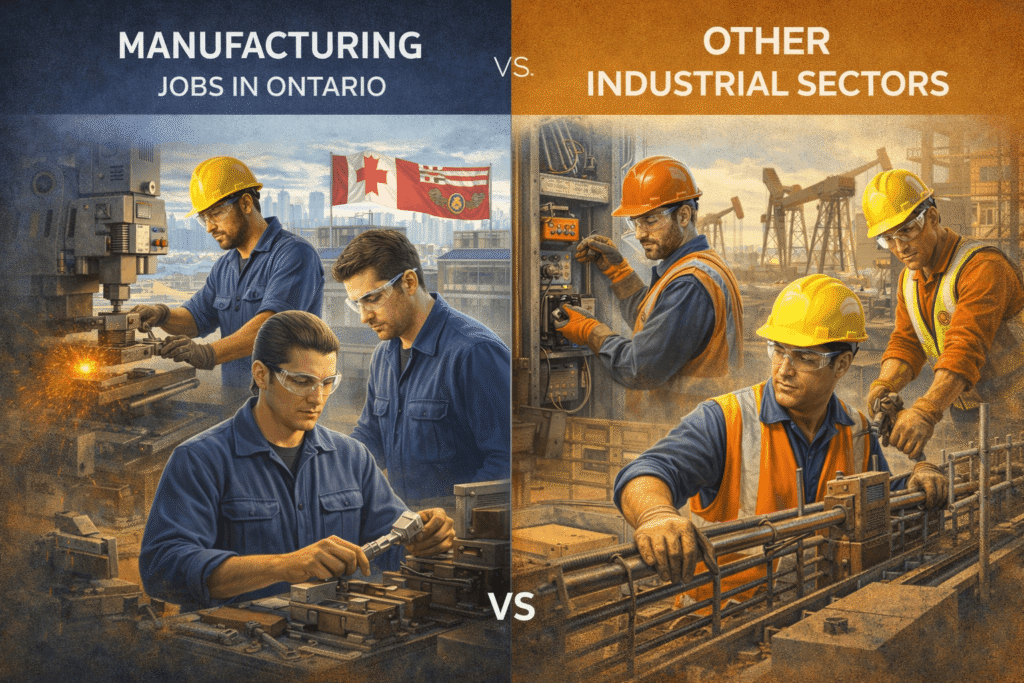

Ontario’s economy is built on a mix of manufacturing, logistics, construction trades, and resource-based industries. From automotive assembly plants in the southwest to food processing facilities across the province, jobs in the manufacturing industry remain central to employment across both urban and mid-sized communities.
While other industrial sectors such as logistics and skilled trades have grown rapidly in recent years, manufacturing jobs continue to provide a strong foundation. As supply chains stabilize and production technologies modernize, manufacturing jobs in Ontario are evolving rather than shrinking.
Growth Outlook for Manufacturing vs Logistics and Trades
Recent industry reports suggest that Canada’s manufacturing sector is experiencing steady long-term growth tied to modernization, reshoring initiatives, and domestic production investment. Companies are increasingly investing in automation, digital systems, and advanced production technologies to remain competitive.
At the same time, logistics has expanded due to ecommerce growth and distribution demands. Skilled trades such as electrical, millwright, and maintenance work also remain in high demand due to infrastructure development and workforce retirements.
The difference lies in structure. Logistics roles often fluctuate based on seasonal demand and consumer activity. Construction trades may be influenced by project-based cycles. In contrast, manufacturing jobs in Ontario are typically tied to consistent production schedules, particularly in automotive, food processing, and industrial supply chains.
Manufacturing growth may not always appear dramatic, but it tends to be stable and ongoing rather than cyclical.
Job Stability, Wages, and Advancement
When comparing industrial sectors, stability becomes a major factor. Manufacturing facilities often operate year-round with predictable shifts and long-term production contracts. This consistency supports regular scheduling and steady employment.
Logistics roles, especially warehouse-based work, can experience fluctuations during peak retail seasons. Construction trades may involve contract-based employment that varies by project duration.
In terms of wages, jobs in the manufacturing industry generally align with competitive industrial pay ranges depending on skill level, certification, and specialization. Skilled production roles, machine operation, and technical positions may offer structured wage progression and overtime opportunities.
Another important factor is advancement. Many manufacturing jobs include clear internal pathways, allowing employees to progress from entry-level production roles into technical, supervisory, or specialized positions over time. Cross-training is common, which strengthens long-term employability.
Employer Demand and Skill Overlap
There is significant overlap in skills across industrial sectors. Safety awareness, teamwork, reliability, and mechanical aptitude are valued in manufacturing, logistics, and trades alike.
However, manufacturing jobs in Ontario often emphasize precision, quality control, and process consistency. Facilities operate within regulated environments where adherence to standards is critical. This structured approach appeals to workers who prefer predictable workflows and clearly defined responsibilities.
Employers across Ontario continue to recruit for manufacturing jobs because production must continue regardless of broader economic cycles. While logistics supports product movement and trades support infrastructure, manufacturing remains the core of physical goods production.
As automation and digital systems expand, manufacturers increasingly seek adaptable workers comfortable with technical processes and modern equipment.
Conclusion – Manufacturing Remains a Stable Path
Ontario’s industrial sector is diverse and interconnected. Logistics, skilled trades, and manufacturing all contribute to the province’s economic strength. Yet manufacturing jobs in Ontario continue to stand out for their long-term stability, structured advancement pathways, and consistent employer demand.
For individuals evaluating industrial career options, jobs in the manufacturing industry offer a balanced mix of reliability and growth potential. While other sectors may experience sharper fluctuations, manufacturing remains a steady contributor to Ontario’s workforce landscape.
As production evolves and facilities modernize, manufacturing jobs continue to provide meaningful employment opportunities across the province. Create a profile on Manucan today!