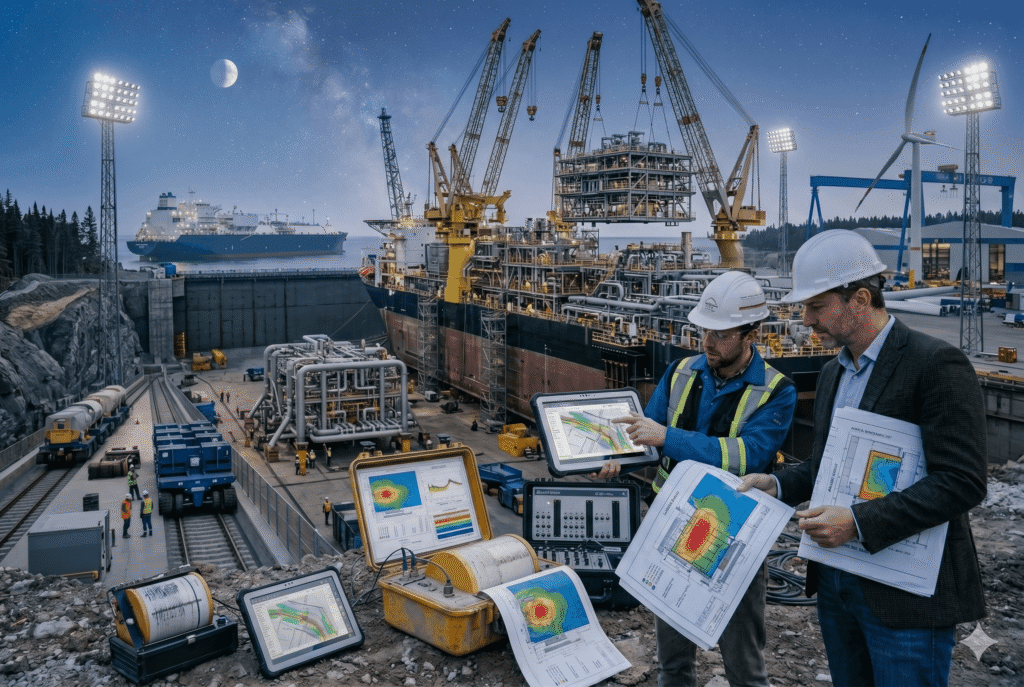

Large-scale infrastructure and transit developments operate under increasing scrutiny for environmental impact, community disruption, and regulatory compliance. From rail corridors and highways to urban transit expansions, managing noise and vibration has become a defining factor in project approval and long-term performance. This is where acoustic engineering services play a critical role, integrating technical analysis with design strategies to ensure infrastructure functions without adverse acoustic consequences.
Effective planning requires more than basic noise assessment. It demands a structured engineering approach that evaluates how sound propagates through complex environments, how vibration interacts with surrounding structures, and how mitigation strategies can be embedded into project design from the outset.
People Also Ask
Why are acoustic engineering services important in transit projects?
Acoustic engineering services help manage noise and vibration impacts, ensuring regulatory compliance, protecting surrounding environments, and improving long-term infrastructure performance.
What methods are used to control vibration in infrastructure projects?
Common methods include vibration isolation systems, track design optimization, damping materials, and structural modifications designed through predictive engineering analysis.
Why Noise and Vibration Control Is Critical in Infrastructure Projects
Infrastructure projects generate both airborne noise and ground-borne vibration, impacting nearby buildings, sensitive receptors, and public spaces. Transit systems, in particular, introduce recurring noise sources that can affect long-term livability and regulatory compliance.
Without proper control measures, projects risk delays, community opposition, and costly retrofits. Noise and vibration assessments are not only environmental requirements but also essential for protecting structural integrity, especially in dense urban environments where adjacent buildings and utilities are highly sensitive to vibration.
How Acoustic Engineering Services Support Project Planning and Design
Acoustical engineering services contribute early in the project lifecycle by identifying potential acoustic risks and integrating mitigation strategies into design plans. Predictive modeling allows engineers to simulate noise propagation, evaluate design alternatives, and establish compliance pathways before construction begins.
This phase often includes environmental noise impact assessments, vibration studies, and the development of design criteria aligned with regulatory standards. By embedding acoustic considerations into infrastructure layouts, materials, and system configurations, projects achieve both operational efficiency and compliance without reactive adjustments later.
Noise and Vibration Monitoring During Construction
Construction activities introduce temporary but significant acoustic challenges. Equipment operation, piling, excavation, and material transport generate fluctuating noise and vibration levels that must be controlled in real time.
Acoustic monitoring systems provide continuous data on site conditions, enabling project teams to adjust construction methods and remain within permissible limits. This proactive approach reduces the likelihood of regulatory violations and ensures accountability throughout the construction phase.
Designing Long-Term Noise Mitigation Solutions
Post-construction performance depends on how well acoustic strategies are integrated into the final infrastructure design. Long-term mitigation may include barriers, enclosures, track-design optimization, vibration-isolation systems, and material selection tailored to site-specific conditions.
These solutions are engineered to balance functionality, durability, and compliance. Infrastructure assets must perform consistently over decades, making it essential that noise and vibration controls are not only effective but also maintainable and adaptable to changing operational demands.
Engineering Infrastructure That Meets Performance and Compliance Standards
Acoustic considerations are no longer secondary in infrastructure and transit development. They are central to achieving regulatory approval, operational efficiency, and long-term sustainability. Strategic integration of acoustic analysis, monitoring, and design ensures that projects meet performance expectations while minimizing environmental impact.
Valcoustics Canada Ltd delivers structured, data-driven solutions as a consulting engineering partner for infrastructure and transit developments. From early-stage assessments to construction monitoring and final mitigation design, every phase is aligned with compliance and performance objectives. Partner with Valcoustics to ensure every project benefits from the precision and insight of a qualified acoustic engineer.