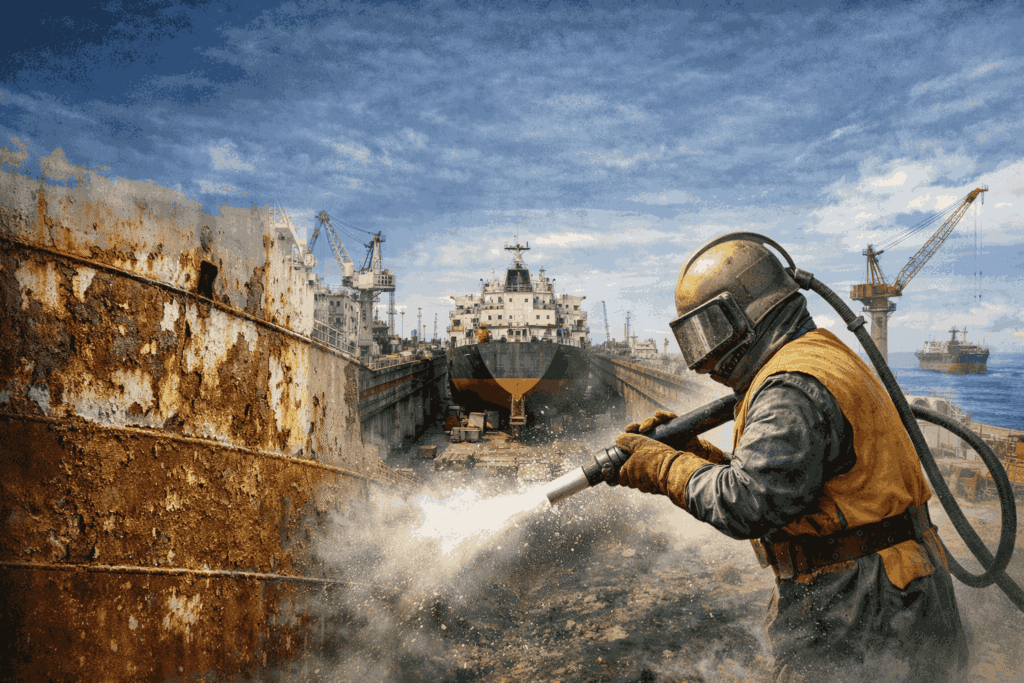

Marine environments create some of the most aggressive corrosion conditions found in any industry. Ship hulls, structural steel assemblies, offshore components, and dockside infrastructure are constantly exposed to salt spray, humidity, and temperature variation. Even minor surface contamination can trigger corrosion that spreads rapidly beneath protective coatings.
For shipyards and naval facilities, coating failure is not simply cosmetic. It affects vessel integrity, safety compliance, and long-term operational costs. Preventing premature breakdown begins at the surface preparation stage, which is why marine operators depend on reliable sandblasting services in Quebec before applying protective coating systems.
1. Salt Contamination Accelerates Corrosion Beneath Coatings
Salt contamination is a primary driver of accelerated marine corrosion. Chlorides embed into steel surfaces during fabrication, transport, and exposure to seawater. When coatings are applied over improperly cleaned substrates, these contaminants remain trapped beneath the film.
Moisture interacts with residual salts, forming corrosion cells that undermine adhesion and cause blistering or underfilm rust. SSPC-compliant abrasive blasting removes visible rust and invisible contaminants while creating a clean substrate ready for coating application.
Sandblasting services in Quebec that follow defined surface cleanliness standards reduce chloride retention and minimize long-term corrosion risk.
2. Heavy Marine Structures Require Controlled Surface Profiles
Marine vessels and dockside structures often involve thick steel plating, weld seams, and complex geometries. Achieving a consistent anchor profile across these surfaces is critical.
An insufficient surface profile leads to weak mechanical bonding between coating and substrate. Excessive profile depth can create uneven coating thickness or localized stress points.
Controlled abrasive blasting establishes a measurable surface roughness that allows epoxy systems, fusion bond epoxy, and marine-grade powder coatings to mechanically interlock with the steel. This balance ensures durability without compromising film integrity.
3. High-Moisture Coastal Conditions Increase Flash Rust Risk
Coastal shipyards face continuous humidity and airborne moisture. After blasting, freshly cleaned steel becomes highly reactive. Flash rust can develop rapidly if coatings are not applied within controlled timeframes.
Professional blasting operations coordinate preparation and coating schedules to minimize exposure between surface cleaning and application. Environmental controls and inspection protocols further reduce the risk of flash rust.
Without these safeguards, corrosion may begin before the coating even cures.
4. Naval and Commercial Marine Projects Demand Compliance
Marine and naval projects require adherence to strict standards and specifications. SSPC surface preparation standards define cleanliness levels and inspection criteria to ensure coating performance under harsh maritime conditions.
Commercial shipbuilding, repair facilities, and naval infrastructure must meet safety and durability compliance benchmarks. Blasting processes that fail to align with defined standards introduce performance uncertainty and potential rework.
Standards-driven preparation supports long-term coating reliability across ship hulls, ballast tanks, structural supports, and dock equipment.
5. Inadequate Surface Preparation Leads to Costly Rework
When coatings fail in marine environments, remediation is complex and expensive. Dry docking, structural access, and repeat blasting significantly increase costs and downtime.
Incomplete preparation often leads to:
- Underfilm corrosion
- Premature delamination
- Coating blistering
- Structural degradation
Rework disrupts operational schedules and increases lifecycle expenses. Proper preparation at the outset reduces these risks and supports predictable performance.
The Role of Engineered Sandblasting in Long-Term Marine Protection
Engineered abrasive blasting provides the foundation for durable marine coating systems. Compliance with ASTM and SSPC standards ensures measurable cleanliness and profile consistency before protective films are applied.
Professional Powder Coating integrates controlled blasting with high-performance coating systems designed for energy, marine shipyards, and heavy industrial environments. This integrated approach enhances adhesion, reduces corrosion initiation points, and extends service life.
Marine Coating Performance Begins with SSPC-Compliant Preparation
Marine corrosion is relentless. Preventing accelerated degradation requires more than selecting a coating. It begins with controlled surface preparation that removes contaminants, establishes proper surface profiles, and aligns with industry standards.
Professional Powder Coating provides compliant preparation and protective systems engineered for demanding marine applications. By prioritizing SSPC-compliant blasting and strict quality control, long-term performance becomes predictable.
Shipyards and infrastructure operators seeking dependable sandblasting services can contact Professional Powder Coating to implement standards-driven solutions that protect marine assets from accelerated corrosion.