
Clear design intent often clashes with practical material limits. Many commercial and industrial projects require privacy, light diffusion, and a clean visual finish. However, traditional frosted glass can pose challenges due to weight, breakage, and fabrication constraints. These challenges impact safety outcomes, delivery schedules, and long-term material performance in business environments.
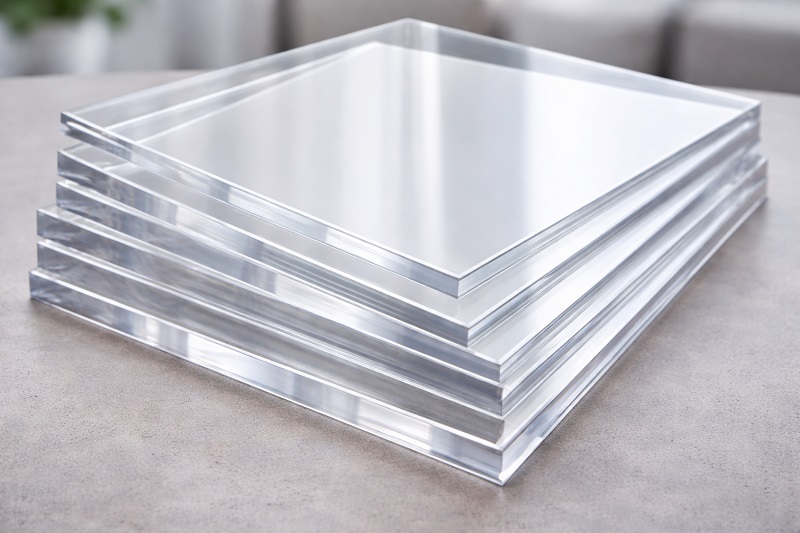
Frosted acrylic sheets address these concerns by delivering comparable visual results with greater flexibility and resilience across business environments.
Understanding Frosted Acrylic and Frosted Glass
Both frosted acrylic and frosted glass help obscure visibility while allowing light to pass through. They are common in office partitions, signage, protective screens, retail fixtures, and architectural features.
- Frosted glass achieves diffusion through acid etching or sandblasting
- Frosted acrylic is manufactured with a matte surface or treated to create consistent light scatter
While the visual effect may appear similar, performance differences emerge after considering fabrication, handling, and durability.
Material Composition and Structural Differences
The core difference lies in how each material forms.
Frosted glass is made from silica-based materials and hardened by thermal or chemical processes. It remains rigid and brittle by nature.
Frosted acrylic sheets are made from polymethyl methacrylate (PMMA), a lightweight thermoplastic known for clarity and dimensional stability.
Key structural distinctions include:
- Acrylic weighs roughly half as much as glass
- Acrylic offers inherent flexibility without shattering
- Glass maintains rigidity but lacks impact tolerance
These differences influence how each material performs during installation and long-term use.
Durability and Impact Resistance
Durability often drives material decisions in commercial settings. Frosted glass can crack or shatter under impact, creating safety risks in high-traffic areas.
Frosted acrylic sheets in Canada provide:
- High impact resistance
- Reduced risk of breakage
- Safer failure behaviour without sharp shards
For businesses prioritizing workplace safety and liability reduction, acrylic offers a more forgiving option.
Fabrication and Customization Capabilities
Project timelines and design requirements often depend on how easily a material can be fabricated.
Frosted acrylic sheets support:
- CNC machining
- Laser cutting
- Drilling, routing, and edge finishing
- Heat forming and bending
Frosted glass typically requires specialized processing and limited post-production modification.
This flexibility supports custom sizes, cutouts, and mounting features without causing production delays.
Optical Performance and Light Diffusion
Light management remains a central reason for selecting frosted materials. Both materials offer effective diffusion, but acrylic provides added control:
- Consistent matte finishes across large panels
- Even light distribution without colour distortion
- Stable appearance under varying lighting conditions
Acrylic also maintains optical clarity over time when properly specified for indoor or outdoor use.
Installation, Handling, and Maintenance Factors
Installation efficiency directly affects project cost and downtime.
Frosted acrylic rods and sheets are:
- Easier to transport due to lower weight
- Simpler to install with standard fasteners
- Less prone to damage during handling
Maintenance considerations further differentiate the materials:
- Acrylic resists moisture-related issues
- Cleaning does not require specialized products
- Minor surface wear can often be polished
Glass installations typically demand heavier supports and stricter handling protocols.
Why Acrylic Sheets are Often the More Practical Choice
When evaluating performance, safety, and adaptability together, frosted acrylic sheets often align better with commercial requirements.
Advantages include:
- Reduced installation complexity
- Improved impact resistance
- Greater design flexibility
- Lower risk during handling and use
Material selection influences more than appearance. It shapes safety, fabrication efficiency, and long-term usability. Frosted acrylic sheets deliver the privacy and light diffusion associated with frosted glass while offering added durability and flexibility. For many Canadian businesses, these factors translate into smoother projects and more reliable outcomes.