
Sustainability now shapes how retail organizations plan digital infrastructure. Retail platforms rely on continuous compute for transactions, inventory systems, analytics, and omnichannel operations. As energy volatility and regulatory pressure increase, retail colocation has shifted from an optional strategy to a core infrastructure decision.
These sustainability trends explain why colocation data center adoption continues to grow across the retail sector and how organizations align performance, cost control, and long-term energy strategy.
1. Renewable Energy as a Foundation for Retail Colocation
Retail infrastructure operates continuously, making power reliability a primary concern. Renewable energy paired with battery storage supports stable operations while reducing exposure to grid outages and energy price swings. This approach links sustainability goals with operational performance rather than treating them as separate objectives.
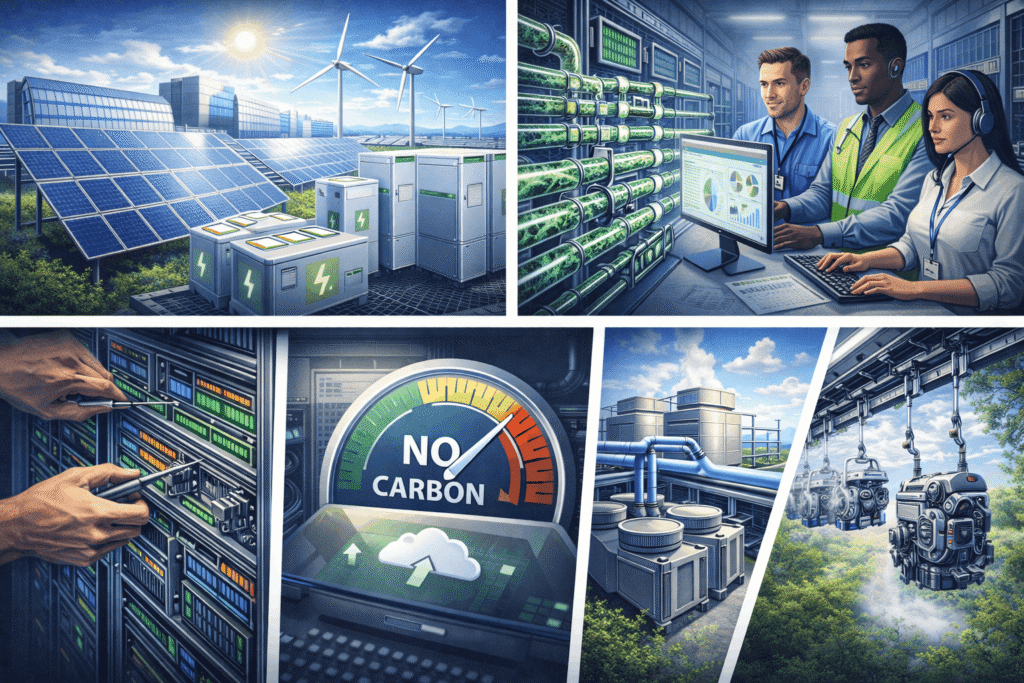
A Retail colocation data center powered by solar generation and battery storage reduces exposure to grid disruptions and energy price fluctuations. This energy model supports predictable performance while helping retail organizations meet sustainability targets without sacrificing reliability.
2. Distributed Colocation Architecture Improves System Resilience
Centralized data centers concentrate risk and increase latency for distributed retail operations. Distributed colocation places compute closer to stores, logistics hubs, and customers, improving resilience during regional power or network disruptions.
Retail colocation environments designed around decentralized infrastructure reduce congestion and improve uptime during regional power or network disruptions. This architecture strengthens business continuity and improves application responsiveness for point-of-sale systems, inventory platforms, and customer analytics tools.
3. Modular Data Centers Accelerate Sustainable Expansion
Modular colocation facilities shorten deployment timelines and align capacity growth with actual demand. Retail organizations expand infrastructure incrementally, reducing construction impact and avoiding oversized facilities that sit underutilized.
Retail colocation providers using modular designs activate infrastructure in months rather than years. This approach reduces construction waste, limits land impact, and aligns capacity expansion with real operational demand. Retail organizations gain flexibility without committing to oversized facilities.
4. Energy Efficiency Shapes Modern Colocation Selection
Energy efficiency directly affects operating costs in colocation environments. Retail organizations evaluate cooling performance, power usage effectiveness, and system optimization as part of infrastructure selection. Efficient designs support dense compute while lowering long-term energy spend.
A modern retail colocation data center integrates intelligent cooling, optimized airflow, and real-time monitoring. These features support dense compute environments while reducing operational overhead. Efficiency improvements translate directly into lower long-term infrastructure costs.
5. Sustainability Alignment Influences Provider Selection
Retail organizations increasingly assess infrastructure partners based on transparency and environmental alignment. Energy sourcing, reporting standards, and operational governance now influence provider decisions.
Retail colocation providers that integrate renewable energy and decentralized design simplify sustainability reporting. This alignment reduces friction between IT, finance, and compliance teams while supporting enterprise governance requirements and long-term planning.
6. Sustainable Colocation Supports Long-Term Retail Scalability
Retail growth depends on infrastructure that adapts to seasonal demand, digital expansion, and changing customer behavior. Sustainable colocation supports this evolution without overbuilding.
Key advantages include:
- Predictable energy costs across extended contracts
- Faster capacity activation without full grid dependency
- Improved uptime during peak retail demand periods
Strategic Implications for Retail Infrastructure Planning
Sustainability now influences infrastructure reliability, cost predictability, and resilience. Retail organizations using colocation reduce long-term energy risk while improving uptime during peak demand. Distributed and renewable-powered models support growth without locking teams into inflexible facilities.
Flux Core Data Systems delivers modular, renewable-powered distributed data centers designed for retail colocation workloads. Systems deploy in as little as 90 days and operate on resilient on-site energy. This model supports low-latency compute, predictable operating costs, and reduced reliance on centralized hyperscale infrastructure.
Explore how Flux Core Data Systems supports sustainable retail colocation through renewable-powered, distributed data center infrastructure designed for performance, resilience, and long-term growth.