
Electrical systems must evolve as homes expand and power demand increases. When breaker panels begin to show limitations, property owners often face a decision: proceed with a residential electrical panel upgrade or opt for a full replacement.
While both options improve safety and capacity, they address different situations. Understanding how upgrades differ from complete electrical panel installation helps homeowners evaluate what aligns with long-term needs and Ontario code requirements.
Upgrades vs New Installs
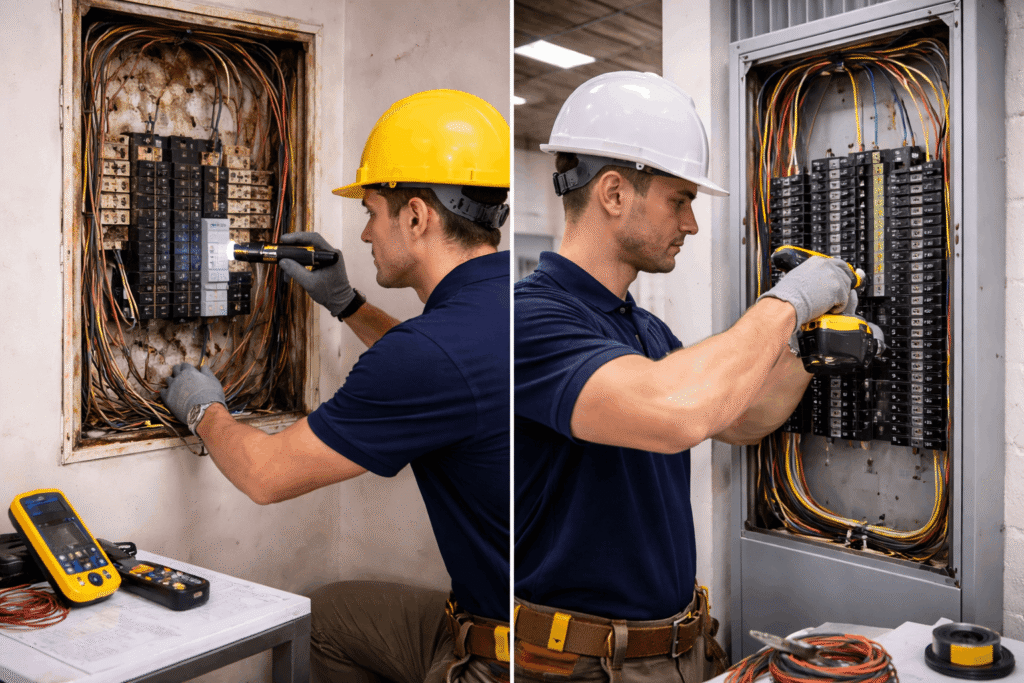
A panel upgrade typically involves increasing service capacity or replacing outdated breakers while keeping the existing panel location. A new installation usually means removing an aging or unsafe panel entirely and installing a modern system.
The right approach depends on the condition of the existing equipment, service size, and projected electrical demand.
Signs You Need an Upgrade
Several indicators suggest a panel upgrade may be necessary:
- Frequent breaker trips
- Limited space for additional circuits
- Installation of high-demand equipment such as EV chargers or heat pumps
- Renovations adding square footage
- Panels rated at 60 or 100 amps are struggling to support current usage
In these cases, electrical panel upgrade services increase capacity while improving safety and reliability.
When Replacement Is the Better Option
Sometimes a simple upgrade is not enough. Full replacement or new electrical panel installation is often recommended when:
- The panel shows corrosion or overheating
- Breakers are outdated or discontinued
- The panel no longer meets current code standards
- Fuse boxes are still in use
- The service location requires relocation for compliance
Replacing the entire system ensures compatibility with modern components and future expansion.
Code and Amperage Requirements
Ontario homes must meet the Ontario Electrical Safety Code. Most modern homes require 100-amp or 200-amp service, depending on load calculations. A residential electrical panel upgrade often involves increasing service to 200 amps to support additional appliances and equipment.
Licensed electricians perform load assessments to determine whether the current panel can safely support projected demand. If calculations show insufficient capacity, upgrading or replacing becomes a compliance necessity rather than a preference.
Permits and inspections through the Electrical Safety Authority (ESA) are mandatory for both upgrades and new installations.
Timeline and Scope Considerations
Panel upgrades and replacements are structured projects that include:
- Load evaluation and system planning
- ESA permit filing
- Utility coordination if service size changes
- Installation and grounding verification
- Inspection approval
Project duration depends on service size, panel accessibility, and coordination with the local utility provider. Licensed contractors provide realistic timelines after assessing the property.
Canadian Wire Wizards’ Process
Canadian Wire Wizards provides licensed electrical panel upgrade services across Ontario. Their approach includes:
- Detailed load calculations
- Evaluation of existing panel condition
- Clear recommendations for upgrade or replacement
- ESA permit filing and inspection coordination
- Code-compliant installation and testing
By aligning installation with long-term electrical needs, they help homeowners avoid repeat work and maintain compliance.
Evaluate Long-Term Electrical Needs
Choosing between a panel upgrade and a new installation depends on current capacity, system condition, and future expansion plans. A professional assessment ensures the decision is based on load requirements and code standards rather than guesswork.
Whether planning a residential electrical panel upgrade or full electrical panel installation, consulting licensed professionals helps protect safety and long-term property value. To discuss options and schedule an assessment, contact Canadian Wire Wizards for compliant, structured guidance tailored to the home.