
Construction schedules rarely fail because of a single trade. They fail when one system slows everyone else down. Vertical access is often that system. As buildings rise, every minute lost waiting for lifts compounds across crews, materials, inspections, and deliveries. What begins as a minor slowdown quickly turns into missed milestones and escalating costs.
This is why multilift construction elevators shift from being a convenience to a requirement on complex projects. When vertical movement cannot keep pace with site demand, productivity stalls, and recovery becomes increasingly difficult.
Why Vertical Access Is the First System to Fail Under Schedule Pressure
Vertical access absorbs the impact of every schedule change. Additional crews, extended work hours, and overlapping trades all increase demand for movement between levels. Traditional lift solutions struggle under this pressure. Without sufficient capacity, congestion forms and delays cascade. Multilift elevators are designed to absorb these spikes without disrupting workflow.
What Are Multilift Construction Elevators?
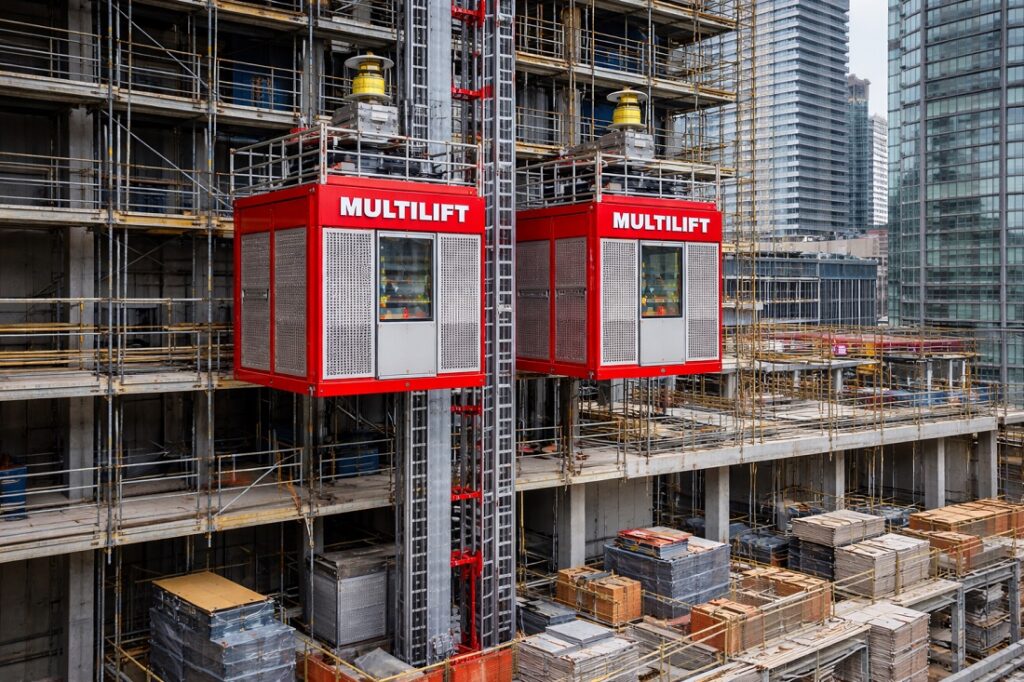
Multilift construction elevators are high-capacity vertical transport systems engineered for demanding construction environments. They support frequent cycles, heavy loads, and simultaneous personnel and material movement. Unlike basic hoists, multilift elevators are designed to scale with building height and workforce density.
The Early Warning Signs of an Impending Vertical Access Bottleneck
Warning signs often appear before schedules slip. Long queues during shift changes, material staging delays, and crews waiting idle at access points indicate insufficient vertical capacity. These conditions signal the need for multilift construction elevators before delays become embedded in the schedule.
When Traditional Lift Solutions Stop Scaling With the Project
As structures grow taller, travel times increase, and cycle efficiency decreases. Single-car or low-capacity systems cannot compensate solely through speed. At this stage, multilift elevators provide the capacity and control logic required to maintain consistent throughput.
How Multilift Construction Elevators Prevent Schedule Breakdown
Multilift construction elevators reduce congestion by increasing car size, optimizing stop sequencing, and supporting higher cycle frequency. These systems move more people and materials per trip, stabilizing access even during peak demand periods.
Project Phases Where Multilift Elevators Become Non-Negotiable
Structural completion, facade installation, and interior fit-out phases generate the highest access demand. Multiple trades require simultaneous movement. Multilift elevators are essential during these phases to prevent downtime due to access.
The Cost of Delaying Multilift Elevator Deployment
Delaying deployment often appears cost-conscious but leads to productivity loss. Labor hours wasted waiting for access quickly exceed the savings from the equipment. Early integration of multilift construction elevators protects schedule integrity and cost control.
Safety and Compliance Risks Caused by Vertical Access Delays
Congestion increases unsafe behavior. Overcrowding, rushed loading, and improper material handling become more likely. Multilift elevators reduce these risks by providing adequate capacity and predictable movement patterns that support compliance requirements.
Throughput vs Equipment Cost: The Trade-Off Many Projects Get Wrong
Focusing solely on rental or purchase costs ignores the impact on throughput. Lower-capacity systems reduce upfront expense but restrict daily output. Multilift construction elevators align equipment investment with labor efficiency and schedule reliability.
How Multilift Construction Elevators Support Predictable Scheduling
Predictability depends on repeatable performance. Multilift elevators deliver consistent cycle times and reduced wait periods. This reliability allows planners to sequence trades accurately and maintain progress across floors.
Common Mistakes Contractors Make With Multilift Planning
Common mistakes include waiting too long to upgrade, underestimating peak demand, and treating vertical access as a temporary constraint. Projects that plan multilift construction elevators early avoid reactive decisions later.
When to Upgrade to Multilift Construction Elevators
Upgrade becomes necessary when access delays affect multiple trades, material delivery slows, or shift overlap increases. These indicators suggest that multilift elevators are required to maintain momentum.
Planning Multilift Deployment Before Delays Escalate
Effective planning evaluates building height, workforce size, material flow, and peak usage periods. Proactive deployment of multilift construction elevators prevents bottlenecks rather than waiting to respond to them.
Vertical Access Delays Don’t Recover on Their Own
Once vertical access falls behind, recovery is difficult and costly. Delays compound, and productivity losses cannot be reclaimed. Investing in the right system at the right time keeps projects moving forward.
UCEL Inc. provides engineered multilift construction elevators designed to support high-throughput construction projects across Canada and the USA.
Connect with UCEL Inc. to deploy multilift construction elevators before access delays stall the entire build.