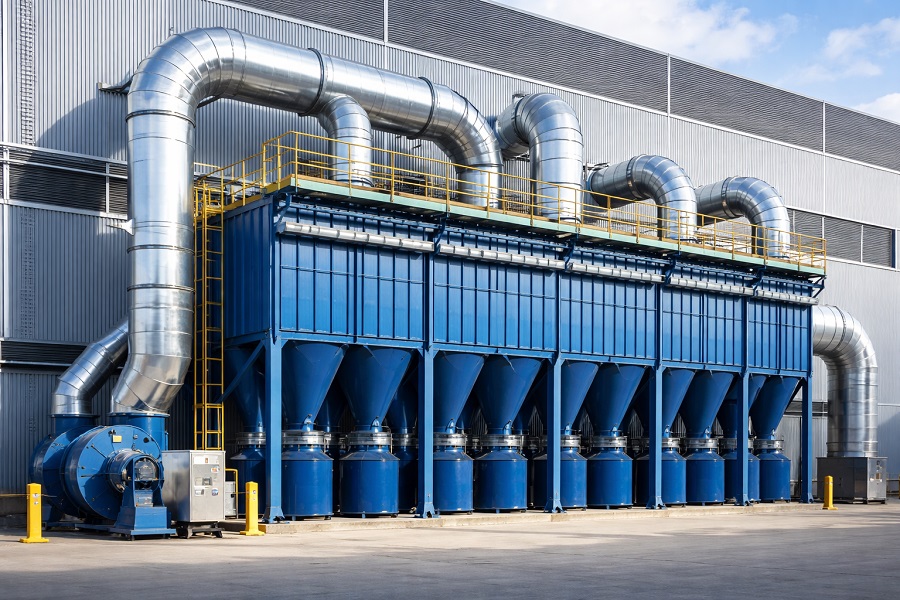

Clean air is one of the most critical factors in maintaining safe, efficient, and compliant industrial operations. From chemical processing plants to power generation facilities, the need for reliable industrial air filtration systems has never been greater. These systems not only protect workers and equipment but also ensure environmental regulations are consistently met.
Modern industries face a growing demand to manage airborne particulates, chemical vapors, and mists that can impact production quality and environmental health. Advanced filtration technologies now offer targeted solutions that address specific process challenges while optimizing performance, longevity, and sustainability.
What Are Industrial Air Filtration Systems?
Industrial air filtration systems are engineered to remove contaminants from process exhaust or ambient air in manufacturing environments. Depending on the application, these systems may capture dust, smoke, mist, or fumes to maintain clean air and regulatory compliance. Each filtration system type is designed to handle specific pollutants and flow conditions, ensuring both operational efficiency and air quality control.
1. Mechanical Air Filtration Systems
Mechanical filters, such as mesh, pleated, or fiber filters, physically trap particulates from the airstream. They are widely used in manufacturing, HVAC, and food processing industries where dust and solid pollutants are prevalent. These systems offer dependable performance, straightforward maintenance, and adaptability across diverse process environments.
2. Electrostatic Precipitators (ESP)
Electrostatic precipitators are highly efficient industrial air pollution control systems that use electric charges to collect fine particulates, smoke, and aerosols. Commonly used in power plants and cement industries, ESPs achieve high collection efficiency while handling large air volumes with minimal pressure drop.
3. HEPA and ULPA Filtration Systems
HEPA (High-Efficiency Particulate Air) and ULPA (Ultra-Low Penetration Air) filters are designed for precision environments like pharmaceutical, electronics, and medical device manufacturing. These systems capture submicron particles, ensuring ultra-clean air quality essential for contamination-sensitive processes.
4. Activated Carbon Filtration Systems
Activated carbon filters are effective in absorbing gases, vapors, and odorous compounds. They are particularly valuable in industries managing volatile organic compounds (VOCs) or chemical emissions, such as paint manufacturing, chemical processing, and laboratories.
5. Baghouse Dust Collectors
Baghouse systems use fabric filter bags to capture fine dust particles from high-volume airflows. They are standard in metalworking, woodworking, and mining operations. These systems can achieve up to 99.9% collection efficiency, providing long service life and consistent performance.
6. Cartridge Filtration Systems
Cartridge filters are compact and ideal for handling fine particulates and fumes. Their pleated design provides a large filtration surface area, making them suitable for applications such as welding fume collection, powder coating, and pharmaceutical production.
7. Wet Scrubber Systems
Wet scrubbers use liquid—usually water or a neutralizing agent—to remove gases and particulates from industrial exhaust streams. These systems are particularly effective in corrosive or high-temperature applications found in fertilizer, acid, and chemical manufacturing.
8. Mist and Oil Mist Collectors
Mist collectors are specialized systems designed to remove fine oil or coolant mist from machining, grinding, or forming operations. They help maintain cleaner air, protect equipment, and reduce potential fire hazards in metalworking environments.
9. Hybrid and High-Efficiency Air Filtration Systems
Hybrid systems combine multiple filtration technologies—such as mechanical and electrostatic—to achieve superior efficiency and longer service life. These integrated systems are becoming increasingly common across industries seeking sustainable, energy-optimized industrial air pollution control.
Choosing the Right Air Filtration System for Each Industry
Selecting the right system depends on factors like contaminant type, airflow volume, temperature, and process conditions. Partnering with a manufacturer that understands these variables ensures a tailored solution designed for long-term reliability, regulatory compliance, and cost efficiency.
The Future of Industrial Air Filtration
Emerging filtration technologies are focusing on energy efficiency, smart monitoring, and recyclable filter media. These innovations are reshaping the performance standards for industrial emissions control systems, driving industries toward cleaner, more sustainable operations.
Clean Air Means Productive Operations
Implementing the right air filtration technology supports worker safety, protects equipment, and helps maintain compliance across industrial environments. Well-designed filtration systems contribute directly to operational reliability and long-term environmental responsibility.